
When you bring your vehicle to Exppress Car Wash Center, you can rest easy knowing that your vehicle is in professional hands.
Paint Protection Film
Paint Protection Film (PPF) is a clear, thick TPU film applied over your car's paint. It takes the damage from stone chips, light scratches, bird droppings and UV rays, so the factory paint underneath stays clean. Think of it as a strong, invisible guard for the body panels.
This page explains what PPF is, the types we offer, how long it lasts, what affects the price, and how we install it at Exppress Car Wash.
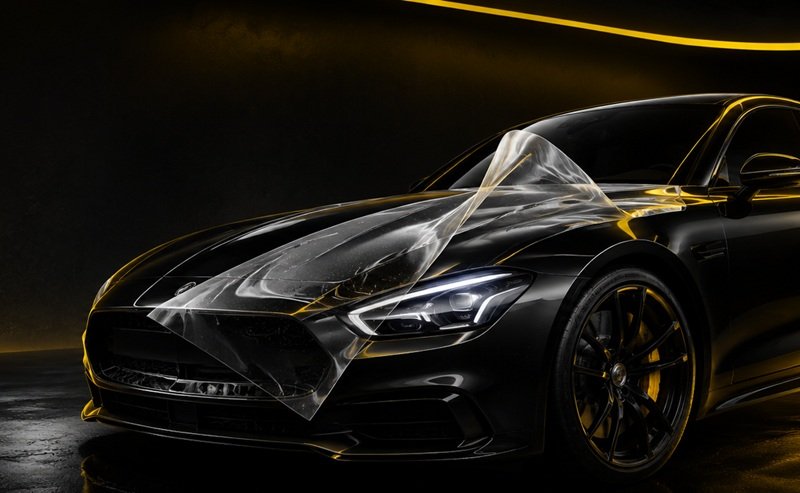
Installed and inspected in-house
Edge-wrapped finish, checked under inspection lights
The basics
PPF is a transparent film made from TPU (thermoplastic polyurethane), usually 150 to 200 microns thick. Good film has three layers: a self-healing top coat, a TPU core that absorbs impact, and an adhesive that bonds to paint and removes cleanly later.
It is a physical barrier, so it actually stops chips and scratches from reaching your paint.
Cross-section of the film
Top surface down to your paint
1 · Self-healing top coat
OutermostCloses light swirls and micro-scratches when it warms up.
2 · TPU core
150–200 microns of urethane. This is the layer that takes the stone hit.
3 · Adhesive
Bonds to the paint and releases cleanly when the film is removed.
Your factory paint
Untouched. That is the whole point.
Stone chips
The TPU core absorbs highway impact instead of your paint.
Light scratches
Swirls and wash marks close up with heat from the sun.
UV and chemicals
Bird droppings and sun attack the film, not the factory paint.
Resale value
Original paint in good condition is worth more when you sell.
Self-healing top coat
Light swirl marks and micro-scratches sit in the top coat, not in your paint. Heat from sunlight or warm water closes them.
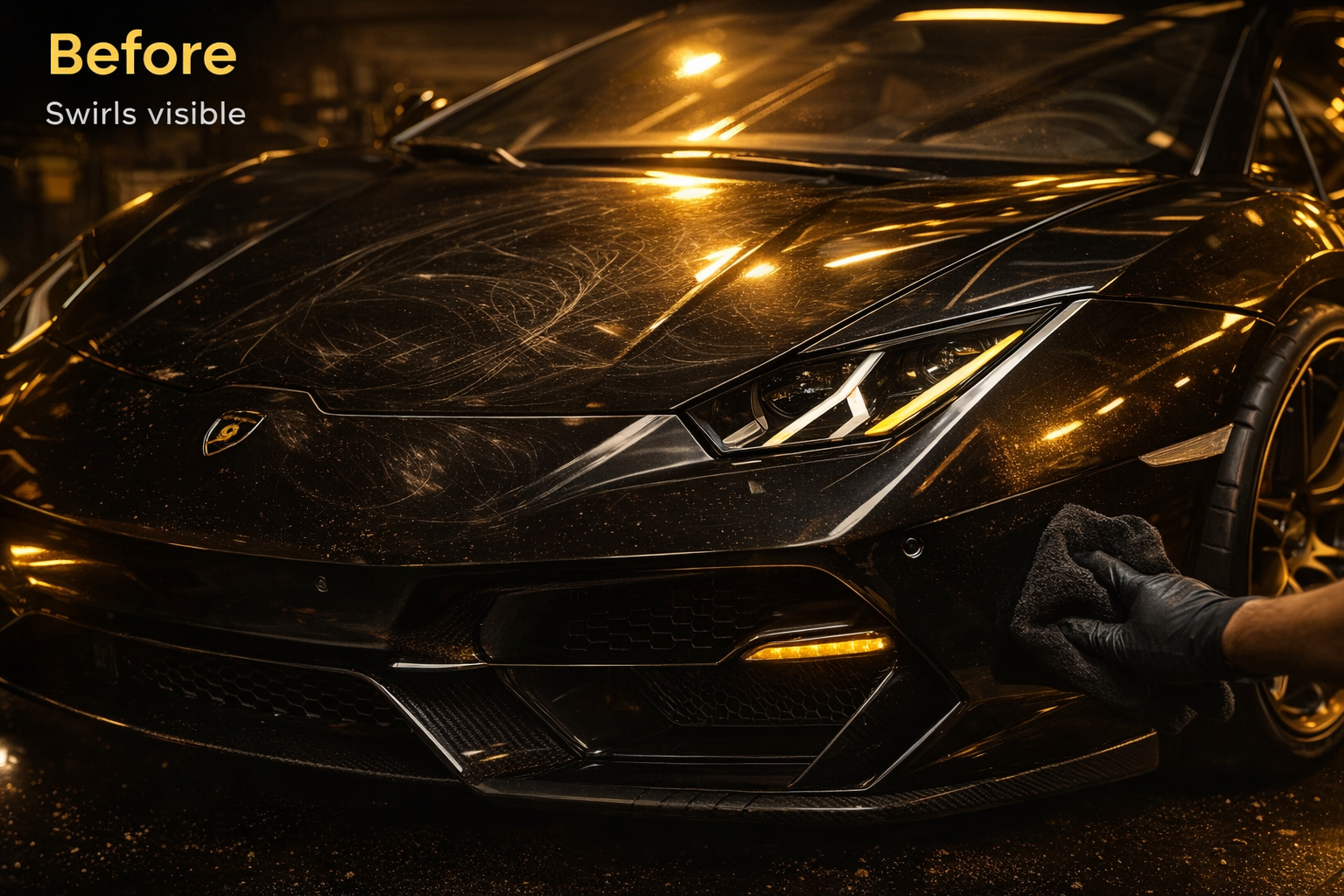
 Before
After
heat
Before
After
heat
Finishes
Different finishes solve different needs. Each has its own page with more detail.
Invisible protection that keeps your original colour and adds gloss depth.
Read more →Turns glossy paint into a satin/frozen finish while protecting it. Fully reversible.
Read more →Full colour change plus real stone-chip protection, stronger than a vinyl wrap.
Read more →Deep gloss-black styling for roofs, chrome delete and accents.
Read more →Carbon-fibre and other textures for mirrors, trims and panels.
Read more →Pre-cut film made for your exact model for clean edges and faster install.
Read more →Protects and helps hold the sunroof glass, and cuts heat coming through it.
Read more →Not sure which one?
Tell us your car and how you drive it. We will suggest the coverage that makes sense.
Ask us →Durability
A good TPU film generally lasts 5 to 10 years, depending on film quality, your driving conditions and how you maintain it. Exppress offers PPF options in the 3, 5 and 7-year range.
Cheap PVC or TPH film yellows and cracks much sooner. That is the difference you are paying for.
3 yr
Entry film
5 yr
Mid range
7 yr
Premium
Pricing
Three things move the price: how much of the car you cover (front package vs full body), the film grade and finish (matte and colour films cost more), and the size of your vehicle.
Older cars may also need paint correction first, which adds to the bill. For an exact quote on your car, ask for an estimate at your nearest outlet.
Straight comparison
These are not the same job. PPF is impact protection: it is thick and stops chips. Ceramic coating is a microscopic layer that adds gloss and makes cleaning easier, but it will not stop a stone chip. Vinyl is mainly for looks and gives very little protection.
Many owners use PPF on high-impact panels and ceramic coating on top for shine.
PPF
Ceramic coating
Vinyl wrap
Best combination: PPF on high-impact panels, ceramic coating on top.
Our workshop
The finish depends on the prep as much as the film. Our install runs in stages.
Wash, iron and tar removal, then clay so the paint is surgically clean before any film touches it.
Where needed. Film locks in whatever is underneath it, so swirls come out first.
Badges and trims come off where required so edges can be wrapped cleanly.
Careful application with slip solution and squeegee — no finger marks, no stretch lines.
Trimmed edges wrapped around the panel so the film stays invisible from every angle.
A controlled cure, then a final inspection under lights for lift lines and bubbles.
Turnaround:
1–2 days front package
3–5 days full body, including cure
Before you book
Still unsure about something? Call us and ask — we would rather explain it now than have you guess.
Ask on WhatsApp →PPF (paint protection film) is a clear TPU film applied over your car's paint. It absorbs stone chips, light scratches and chemical damage so the paint underneath stays protected.
Quality TPU films have UV inhibitors that resist yellowing. Cheaper PVC or TPH films yellow and crack faster. Exppress uses premium film with warranty cover.
A front package usually takes 1 to 2 days. A full-body install typically takes 3 to 5 days, including prep, application and curing.
Yes. When removed by a trained installer with controlled heat, genuine film peels off cleanly and the factory paint underneath stays intact.
They do different jobs. PPF protects against physical damage like chips; ceramic adds gloss and easy cleaning. For full protection, many owners use both.
Next step
Book a PPF consultation or ask for a price estimate for your car. Tell us the model and how much coverage you want, and we will explain what the install involves and what it costs.
TPU film only
No PVC or TPH substitutes
Trained installers
Edge-wrapped, inspected finish
Warranty-backed
Terms shared before you book
We reply on the same working day.