
How to Remove Water Spots from Car Paint | Exppress Car wash
Updated At : October 24, 2026
How to Remove Water Spots from Car Paint Safely
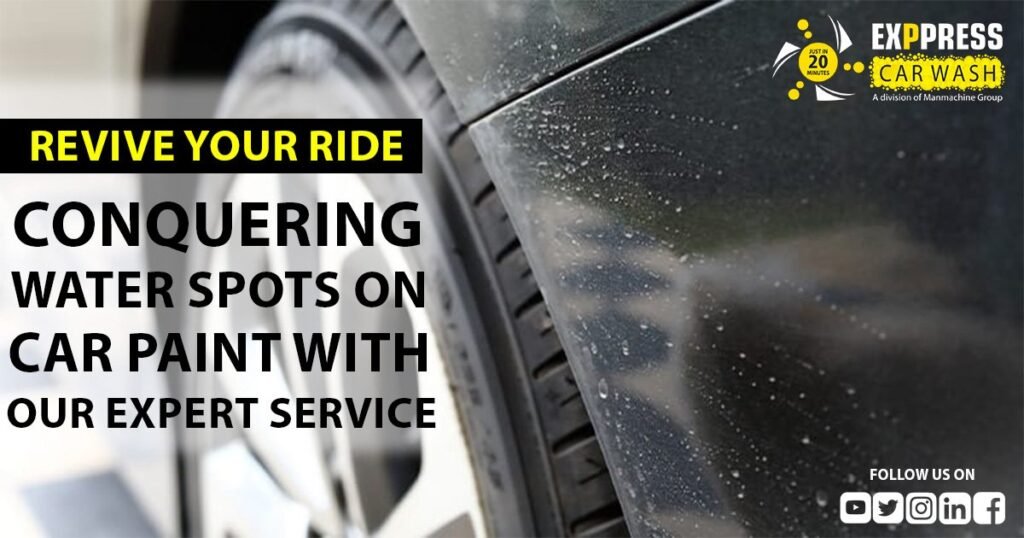
Water spots on car paint can be frustrating, especially when you’ve just washed your vehicle and expected a clean, glossy finish. Those small white marks may seem harmless, but some can become difficult to remove when left untreated.
If you park your car outdoors, wash it with hard water or regularly drive through dusty and polluted areas, you may notice water marks on the bonnet, roof, doors or windows.
The good news is that not every water spot requires polishing. Many marks are simply mineral deposits sitting on the surface and can be treated with suitable automotive cleaning products.
How do you remove water spots from car paint? Start by washing and drying the vehicle to remove loose dirt. If the marks remain, use a compatible automotive water spot remover according to the product instructions. If the deposits have caused etching in the clear coat, professional polishing may be needed after a paint inspection.
At Exppress Car Wash, professional washing, polishing and detailing services are available to help car owners maintain their vehicle’s appearance.
In this guide, we’ll explain what causes water spots, how they can be treated, when professional correction may be necessary and how to reduce the chances of them returning.
Understanding Water Spots on Car Paint
Water spots usually form when water droplets remain on the vehicle’s surface and evaporate.
Water from a hose, sprinkler, rain or other sources may contain dissolved minerals and contaminants.
When the water dries, substances such as calcium, magnesium and silica can remain on the paint or glass.
These deposits often appear as white rings, chalky patches or dull marks.
Water spots are particularly noticeable on dark-coloured vehicles, although they can form on cars of any colour.
The severity depends on the water quality, how long the deposits remain, the temperature of the painted surface and the condition of the finish.
What Causes Water Spots on Cars?
Common causes include:
- Hard water: Water containing dissolved minerals can leave visible residue after drying.
- Washing in direct sunlight: Water evaporates quickly on hot paint, leaving minerals behind.
- Sprinkler water: Repeated sprinkler exposure can leave deposits on nearby parked vehicles.
- Rain and pollution: Rainwater can carry environmental contamination that affects the vehicle’s finish.
- Improper drying: Allowing a freshly washed car to air-dry can leave unwanted mineral marks.
A regular wash can remove some fresh water spots, but stubborn deposits may need a more specific treatment.
Types of Water Spots: Mineral Deposits vs Paint Etching
Before choosing a removal method, it’s important to understand what kind of mark is present.
1. Surface Water Spots
These are mineral deposits left on top of the paint after water evaporates.
They may appear as white rings or cloudy marks.
Surface deposits can sometimes be removed with automotive shampoo, but more stubborn spots may need a dedicated water spot remover.
2. Bonded Mineral Deposits
Some mineral residue becomes more difficult to remove after repeated exposure or prolonged drying.
Ordinary shampoo may not remove these deposits completely.
A compatible automotive water spot remover may help break down the mineral buildup without requiring abrasive polishing.
3. Etched Water Spots
Etching is different from a deposit sitting on top of the paint.
It occurs when the surface itself has been affected, leaving a visible mark in the clear coat.
Chemical water spot removers may remove remaining minerals but cannot necessarily correct the etched surface.
Professional polishing may help with suitable light etching, depending on the available clear coat and the depth of the damage.
Deeper defects may not be fully removable without more extensive repair.
| Type of Water Spot | Appearance | Possible Treatment |
|---|---|---|
| Fresh surface deposit | Light white marks | Washing and proper drying |
| Bonded mineral deposit | Persistent rings or chalky residue | Compatible water spot remover |
| Clear-coat etching | Marks that remain after deposits are removed | Professional paint inspection and possible polishing |
Important: The correct treatment should be based on the paint’s condition. Aggressive rubbing or unnecessary polishing can create additional defects.
The Exppress Car Wash Difference
Removing water spots properly requires more than wiping the affected area repeatedly.
Different marks may need different treatments, and using the wrong product or technique can affect the paint or an existing protective coating.
Exppress Car Wash offers professional car washing, detailing and paint correction services through its outlet network.
The company’s car polishing services are intended to improve suitable paint defects and restore surface gloss.
For vehicles with water marks, the first step should be to inspect the surface and establish whether the problem involves removable mineral deposits or actual clear-coat damage.
This helps determine whether cleaning, spot treatment or polishing is appropriate.
Not every water spot requires machine polishing, and not every etched mark can be completely removed.
The availability of specific water spot removal treatments should be confirmed with your selected Exppress Car Wash outlet.
Our Comprehensive Water Spot Removal Process
The appropriate water spot removal process depends on the type of contamination and the condition of the vehicle.
Professional detailing may involve the following stages.
Step 1: Thorough Cleaning
The process begins with a proper exterior wash to remove loose dirt, dust and road grime.
This is important because cleaning or polishing over dirt can increase the risk of scratching the paint.
The vehicle should be washed using suitable automotive shampoo and clean washing tools.
After rinsing, the surface is dried using a soft microfiber towel.
Once the vehicle is clean, the remaining water spots are easier to inspect.
Step 2: Water Spot Inspection and Treatment
The affected paint is inspected to understand the nature of the marks.
If the spots are caused by mineral deposits, a suitable automotive water spot remover may be used.
These products are designed to help break down deposits such as calcium and other minerals.
The technician should select a product compatible with the painted surface and any existing coating.
Treatment must follow the manufacturer’s instructions, including any restrictions on application temperature, contact time and rinsing.
A small-area test may be appropriate before treating a larger section.
If the marks disappear after the deposits are removed, polishing may not be necessary.
Step 3: Polishing and Paint Correction if Required
If visible marks remain after proper cleaning, they may be caused by clear-coat etching or another paint defect.
In suitable cases, professional polishing can improve the appearance of affected paint.
Polishing uses appropriate compounds, pads and equipment to refine the clear coat.
However, this process removes a small amount of material from the painted finish.
For that reason, polishing should only be performed when needed and after the paint has been assessed.
Deep etching may not be fully correctable through polishing alone.
Exppress Car Wash offers professional car polishing and paint correction for suitable surface defects.
Step 4: Protective Treatment
After cleaning or paint correction, some car owners choose an additional protective treatment.
Depending on the condition of the vehicle and the owner’s preference, this may include wax, sealant or ceramic coating.
A suitable protective layer can help improve gloss and make certain contaminants easier to remove during routine washing.
Professional ceramic coating also provides hydrophobic properties, helping water bead and move across the paint more easily.
However, ceramic coating does not completely prevent water spots.
If mineral-rich water remains on the surface and dries, deposits can still form.
Proper washing and drying are still necessary to maintain the finish.
Benefits of Choosing Exppress Car Wash
Professional assistance can be useful when ordinary washing has not removed stubborn water marks.
1. Expertise and Experience
Professional car detailing requires an understanding of different paint conditions, cleaning products and correction techniques.
Exppress Car Wash provides car care services using trained technicians and established service processes.
A paint inspection can help determine the appropriate treatment rather than automatically recommending polishing.
2. Suitable Equipment and Products
Different water spots require different approaches.
Professional detailing equipment and compatible cleaning products can help address mineral deposits and suitable paint defects.
For example, chemical spot removal and machine polishing serve different purposes and should not be treated as interchangeable procedures.
3. Time and Cost Considerations
An appropriate inspection may help avoid unnecessary treatments.
Fresh mineral deposits may need only washing or targeted cleaning, while etched clear coat can require more involved work.
The cost and duration depend on the affected area, paint condition and selected treatment.
Ask your nearest outlet for an assessment and quotation before proceeding.
4. Customer Service and Treatment Planning
A professional service provider should explain what work is recommended and what results are realistic.
It is useful to understand whether the treatment includes cleaning, polishing, protective coating or a combination of services.
You should also ask about any limitations, especially when water spots have already caused visible paint damage.
How to Prevent Water Spots on Car Paint
Removing water spots is useful, but proper maintenance can help reduce how often they return.
1. Wash Your Car in the Shade
Avoid washing the car when its painted panels are very hot.
Water and shampoo can dry quickly in direct sunlight, increasing the likelihood of visible residue.
Whenever practical, choose a shaded washing area and allow the panels to cool first.
2. Dry the Car After Washing
Do not leave mineral-rich rinse water to dry naturally on the paint.
Use a clean, soft microfiber drying towel to remove water after the final rinse.
Pay attention to areas around mirrors, door handles and panel gaps where water may collect.
3. Consider Filtered Water for the Final Rinse
If your local water supply contains high levels of dissolved minerals, filtered or suitably treated water may help reduce spotting during rinsing.
This can be especially useful where hard-water deposits are a recurring problem.
4. Avoid Harsh Cleaning Methods
Do not scrub dry mineral deposits with rough cloths or abrasive materials.
Avoid using unknown household chemicals or acidic cleaners that are not intended for automotive surfaces.
Improper cleaning can damage paint protection or create scratches.
5. Maintain Your Paint Protection
Wax, sealants and ceramic coatings can make routine cleaning easier when correctly applied and maintained.
However, protective treatments cannot guarantee that water spots will never form.
Regular washing, proper drying and prompt removal of contamination remain important.
Can Ceramic Coating Prevent Water Spots?
Ceramic coating helps water bead on the paint and can make certain deposits easier to remove.
Its hydrophobic properties are useful for regular maintenance.
However, water beading does not mean water always rolls off the vehicle.
Droplets can remain on horizontal surfaces such as the bonnet and roof.
If those droplets contain minerals and evaporate, water spots may still appear.
The main advantage of ceramic coating is that it can provide a protective layer and make certain cleaning tasks easier.
It should not be considered a permanent solution to hard-water deposits or clear-coat etching.
Frequently Asked Questions About Water Spots on Car Paint
1. How do you remove water spots from car paint?
Start by washing and drying the vehicle. If mineral marks remain, a compatible automotive water spot remover may help dissolve the deposits. If the marks have etched the clear coat, professional paint correction may be required.
2. Can water spots permanently damage car paint?
Some water spots are only surface deposits and can be removed. However, certain contamination can leave etching or staining in the clear coat. The outcome depends on the severity and how long the marks have been present.
3. Does car polishing remove water spots?
Professional polishing may correct suitable light etching, but it is not necessary for every water spot. Mineral deposits should usually be addressed with appropriate cleaning first.
4. Can ceramic coating stop water spots?
No. Ceramic coating can improve water repellency and make maintenance easier, but mineral-rich water can still dry on coated surfaces and leave deposits.
5. Why do water spots appear after washing a car?
Water spots often appear when rinse water containing dissolved minerals dries on the vehicle. Washing hot panels, using hard water and allowing the car to air-dry can increase the likelihood of visible marks.
6. Are water spots more visible on black cars?
Yes. White mineral residue is generally more noticeable against dark paint, including black and dark blue finishes. However, water spots can affect vehicles of every colour.
7. Can old water spots be removed completely?
It depends on whether the marks are removable mineral deposits or etched paint defects. Many surface deposits can be treated, but deeper etching may require professional correction and may not be fully removable.
8. How can I prevent water spots after washing?
Wash on cool panels, rinse thoroughly, dry with a clean microfiber towel, and consider filtered rinse water if your local supply is very hard. Maintain any existing protective coating according to its instructions.
Conclusion: Keep Your Car’s Paint Clean and Glossy
Water spots on car paint are a common problem, but the correct removal method depends on their cause.
Fresh mineral deposits may be removed with suitable washing products, while stubborn deposits can require targeted treatment. Marks that have etched into the clear coat may need professional polishing.
At Exppress Car Wash, car washing, detailing, polishing and paint protection services are available to help customers maintain their vehicles.
The aim should always be to choose the least aggressive suitable treatment and avoid unnecessary paint correction.
For long-term maintenance, wash the vehicle correctly, dry it after rinsing, and address contamination before it becomes difficult to remove.
Need help with stubborn water spots?
Explore Exppress Car Wash car polishing services or find your nearest Exppress Car Wash outlet to ask about paint inspection and available treatments.
Website: https://www.exppresscarwash.com/
Contact: +91 80-100-44000