Car Detailing Equipment Maintenance: A Practical Guide for Studio Owners
Updated At : October 16, 2026
Car Detailing Equipment Maintenance Guide for Owners
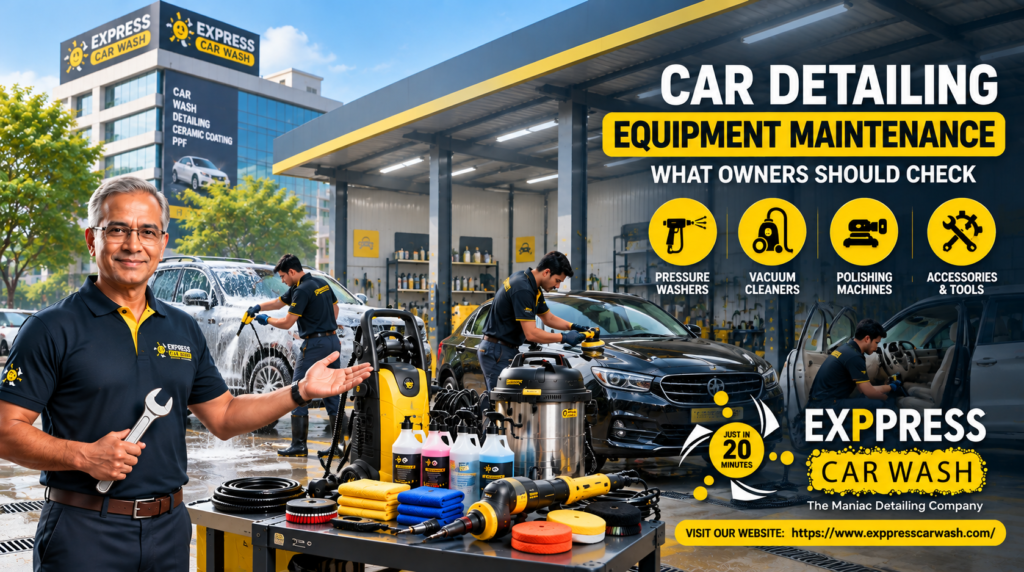
A car detailing studio depends on its machines every day. Pressure washers clean vehicles, vacuum cleaners remove dirt from interiors, and polishing machines help improve paint finish.
Now imagine a pressure washer stops working when three cars are waiting. The team cannot finish the scheduled washes, customers start asking about delays, and the owner has to arrange repairs.
This is why car detailing equipment maintenance matters.
Regular checks help studio owners notice problems early, keep machines in suitable working condition and plan repairs before they affect more appointments.
If you are planning a car detailing franchise in India, equipment maintenance should be part of your daily operating plan.
What Is Car Detailing Equipment Maintenance?
Car detailing equipment maintenance means checking, cleaning and servicing the machines and tools used in a detailing studio.
It includes checking hoses and cables, cleaning filters as instructed, inspecting polishing accessories and keeping records of machine servicing.
The aim is simple: use equipment that is safe, suitable for the job and working as intended.
Not every maintenance task should be done by studio employees. Some checks are straightforward, while electrical and mechanical repairs need qualified technicians.
Which Equipment Needs Regular Maintenance?
Most detailing studios use several types of equipment.
The exact list depends on the services offered.
| Equipment | Main use | What owners should monitor |
|---|---|---|
| Pressure washer | Exterior vehicle washing | Hoses, fittings, leaks and unusual operation |
| Wet and dry vacuum | Interior and suitable wet cleaning tasks | Filters, collection tank, hoses and attachments |
| Polishing machine | Paint correction and finishing | Cable condition, backing plate, vibration and accessories |
| Car dryer or blower | Removing water from suitable areas | Attachments, visible damage and abnormal noise |
| Foam lance and spray equipment | Applying suitable cleaning products | Connections, seals and product compatibility |
| Microfiber towels and polishing pads | Cleaning and paint-care work | Cleanliness, contamination and wear |
This is a general checklist. Always follow the instructions supplied with each machine.
1. Check Pressure Washers Before Starting Work
A pressure washer is one of the most frequently used machines in a car wash or detailing studio.
Before using it, look at the visible condition of the hose, gun, connections and power cable where applicable.
Check for signs of damage, loose fittings or leaks.
Make sure the water supply is suitable for the machine.
If the washer produces an unusual sound, loses performance or develops a leak, stop using it and follow the manufacturer’s instructions.
Do not continue washing vehicles with damaged pressure equipment.
Filters, pumps and pressure-related components should be maintained according to the machine manual. Repairs should be handled by an appropriately qualified service technician.
If you are setting up a studio, review the equipment requirements before selecting your Exppress Car Wash franchise format.
2. Keep Vacuum Cleaners in Good Condition
Vacuum cleaners are used for seats, carpets, floor mats and other suitable interior areas.
Over time, dirt can collect in the container and filters.
This can affect suction and machine performance.
Check the collection tank, filters, hose and attachments according to the manufacturer’s instructions.
Empty and clean the collection container when required.
A wet and dry vacuum must be configured correctly for the type of material being collected.
Do not use a dry-only vacuum to collect liquids.
If the machine starts overheating, produces an unusual smell or makes an abnormal sound, stop using it.
Electrical repairs should be left to qualified personnel.
3. Inspect Polishing Machines and Pads
Polishing machines need attention because they are used directly on painted surfaces.
A machine that vibrates abnormally or has damaged accessories should not be used on a customer’s car.
Before polishing, inspect the visible condition of the machine, backing plate and power cable where applicable.
Check that the pad is suitable for the machine and the work being performed.
A dirty or damaged pad can affect the finish.
Polishing pads should be cleaned and maintained according to the pad manufacturer’s instructions.
Replace pads that are damaged or no longer suitable for use.
If the machine develops unusual vibration, noise or electrical problems, stop using it and arrange the appropriate inspection.
Do not attempt internal machine repairs without the required qualifications.
4. Look After Foam Lances, Spray Bottles and Cleaning Tools
Small accessories also affect daily work.
A leaking foam lance or damaged spray bottle can waste products and interrupt cleaning.
Inspect bottles, seals, sprayers and connections for visible damage.
Use containers and accessories compatible with the products being handled.
Keep product labels readable.
Never mix cleaning chemicals unless the product manufacturer specifically permits it.
Store chemicals and accessories according to their instructions.
Brushes, applicators and microfiber towels should also be checked before use.
Do not use contaminated accessories on sensitive vehicle surfaces.
5. Keep the Washing Area Safe and Organised
Equipment maintenance is not limited to individual machines.
The working area also needs attention.
Look for water collecting where employees walk, damaged cables, blocked access and hoses lying across busy areas.
Keep machines and accessories in their assigned storage locations.
Make sure electrical equipment is used in a manner suitable for the working environment and according to its instructions.
A tidy workspace makes it easier to identify problems and reduces avoidable interruptions.
For anyone considering a car detailing franchise, the layout should support the services and equipment planned for the studio.
Daily, Weekly and Scheduled Equipment Checks
A studio owner does not need to perform every technical maintenance task personally.
However, someone should be responsible for ensuring that inspections and servicing are completed.
| When | What to check | Responsible person |
|---|---|---|
| Before use | Visible hoses, cables, fittings and machine condition | Trained equipment operator |
| After use | Cleaning and storage required by the manual | Trained equipment operator |
| Regular stock and tool review | Pads, towels, brushes and accessories | Studio supervisor |
| At manufacturer-specified intervals | Filters, machine servicing and other scheduled maintenance | Authorised staff or service provider |
| When a fault appears | Stop use, report the issue and arrange assessment | Operator and studio manager |
This table is an operating guide, not a fixed servicing schedule. The equipment manufacturer’s instructions determine the correct maintenance intervals.
Maintain a Simple Equipment Service Register
A maintenance register helps the owner know which machines have been inspected and serviced.
It does not need to be complicated.
Record the equipment name, model, service date, problem reported, action taken and next maintenance requirement.
For example, if a vacuum repeatedly loses suction, the register can help the manager see whether the same issue has occurred before.
Keep purchase invoices, warranty details and service provider information together.
These records are also useful when discussing repairs with the equipment supplier.
What Should You Do When a Machine Breaks Down?
Suppose a polishing machine starts vibrating more than usual during a job.
The technician should stop using it and inform the supervisor.
The machine should not be returned to service until it has been assessed and is suitable for use.
If the problem affects the customer’s appointment, explain the delay and arrange a revised completion time.
Do not ask an untrained employee to open or repair electrical equipment.
The same approach applies to pressure washers, vacuum cleaners and other machines.
Customer vehicles should not be worked on using faulty equipment.
Plan Equipment Maintenance Before Opening a Franchise
When comparing car detailing franchise opportunities, investors often focus on the machines included in the setup.
But the equipment list is only one part of the decision.
Before investing, ask:
- Which machines are included in the franchise package?
- Who provides the equipment warranties?
- Who handles repairs and scheduled servicing?
- Are spare parts and authorised service providers available?
- What happens when an important machine is unavailable?
- Does the franchise team provide equipment operating guidance?
- Which maintenance expenses are the franchise owner’s responsibility?
These questions help you understand the practical requirements of running the studio.
Equipment Planning With Exppress Car Wash
Exppress Car Wash offers franchise opportunities for car washing, car detailing service and vehicle protection services.
The equipment needed depends on the selected franchise format and the services it includes.
Before choosing a format, discuss the proposed equipment list, installation requirements, operator training and servicing responsibilities with the franchise team.
The exact support and warranty arrangements should be confirmed in the current written proposal.
You can explore the Exppress Car Wash franchise opportunity to understand the available business formats and submit an enquiry.
FAQs
1. How often should car detailing equipment be maintained?
Inspect equipment before use and follow the manufacturer’s servicing schedule. Maintenance frequency depends on the machine, operating hours and working conditions.
2. What maintenance does a car wash pressure washer need?
Check hoses, fittings, visible leaks and general machine condition. Follow the manual for filter care and scheduled servicing. Stop using damaged equipment.
3. How do you maintain a car polishing machine?
Inspect the machine, backing plate, cable and polishing pads before use. Clean accessories as instructed and arrange servicing if unusual vibration or noise develops.
4. What happens if detailing equipment breaks down during service?
Stop using the faulty machine, inform the supervisor and arrange appropriate repairs. Update the customer if the breakdown affects the promised delivery time.
5. Does Exppress Car Wash provide equipment and maintenance support?
Exppress Car Wash describes equipment planning, setup guidance and operational training. Confirm maintenance coverage, warranty terms and repair responsibilities in the current franchise proposal.
Final Thoughts
A detailing studio cannot deliver consistent work if its machines are regularly unavailable or unsuitable for use.
Start with simple visual checks, keep equipment clean according to the manuals, record maintenance and arrange professional servicing when required.
Do not ignore unusual sounds, leaks or damaged accessories.
For a new car detailing franchise owner, a clear maintenance routine is one of the practical steps involved in managing daily operations.